
Writing for Tomorrow
Algorithms reward what spreads in hours. Discipline, faith, and reflection take years. That tension nearly made me quit writing.

I enjoy a very specific pain that comes from exercise. It’s called DOMS—delayed onset muscle soreness. It’s the body’s announcement of a good workout, those micro-tears in your muscle fiber signaling for inflammation and healing.
I used to rarely feel them. Now, with each passing year, it arrives sooner and lingers longer. Not to be dramatic—I’m only thirty-seven—but the speed of the soreness I’m currently experiencing reminds me of something.
I used to think only my words would outlive me. Now I recognize the iron will too.
Yet what we push for now must always wrestle with the long haul.
Now Versus Tomorrow
In my last essay, I shared about my lifting life1. Aside from the odd Reel or joke, it’s not something I’ve shared too deeply with many. I protect it because it’s a space I can dominate. It’s never you versus me, but myself today versus myself yesterday.
Which is interesting, because I regularly share my writing life on here, and it’s a space where it’s me today versus myself tomorrow. Let me explain.
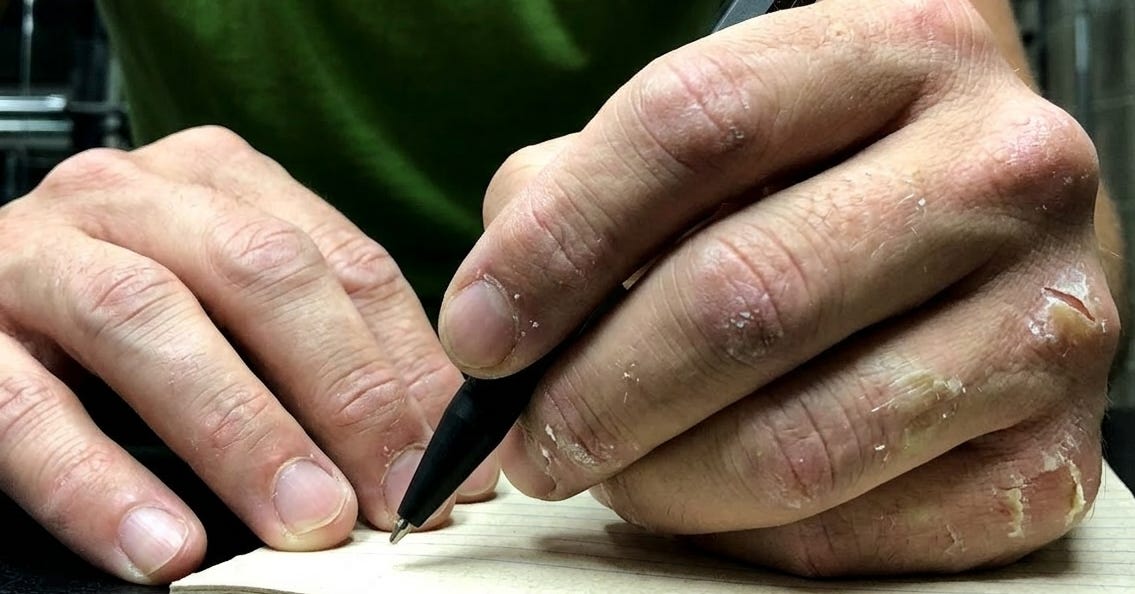
We can say we write for this target audience or that, but the reality is anyone who wants immediate success today must write for one judge: the algorithm.
And scripting anything for the machine demands something more akin to rumor than genuine relevancy. We share what others want to hear on a topic, and when we do it well, we are rewarded with clicks and views—and maybe enough money to buy a cup of coffee.
Look at even this outlet, Substack. While I do not fault it for doing so, it’s pushed the need to engage in Notes for engagement. Small, consumable posts with observations, reactions, and encouragements. Get enough quick responses of likes, comments, or restacks, and you get more engagement.
But this trend is not just in writing.
In our language, we now have the horrid phenomenon of “algospeak.” We replace legitimate words like suicide and murder with “unalive,” or say “seggs,” and hope we make those “g” sounds clear enough to stump the bots.
In our videos, we have gone beyond mere short-form content to a hyper-fast editing style full of quick cuts, constant stimulation, and hooks to keep viewers watching longer.
In our worship, more than 90% of churches surveyed in Pushpay’s 2024 State of Church Technology report offer a hybrid model of ministry, with 91% of churches live-streaming worship services.
It takes a tremendous amount of skill and ability to reach the top in any of these fields. And I am not saying it’s a bad skill to have—just not one that I have.
Last week, I had a crisis of faith. Not with God, but with my own ability to do this writing thing. I spend a lot of effort to feel like an NPC in people’s lives, and NPCs don’t get attention. I value my time too much, and so I thought about dropping out entirely.
It’s a highly personal choice many writers make. Better writers than I have walked away, and I don’t fault them.
In my struggle, I confused an inability to stay up-to-date as a father, husband, and employee with the inability to write.
But how do we continue to write on topics that require application over years in a time where virality ends in hours? Discipline, faith, reflection—the kinds of things that compound slowly—rarely compete with what’s trending. So how?
I don’t know. But I do know I will find one. It may not be emotionally satisfying, and I am willing to bet more than a dollar it won’t be pretty—but neither are my deadlift, squat, and bench sometimes, and I have no problem posting those.
To those who read this far, forgive me for my struggle, and forgive me for not having this one wrapped up in a bow.
But know this: my words will outlive me, and I hope they do in your mind.
Long after my last deadlift, the iron will still be there.
God bless,
-V
p.s. Happy anniversary, Kelly Jean!
